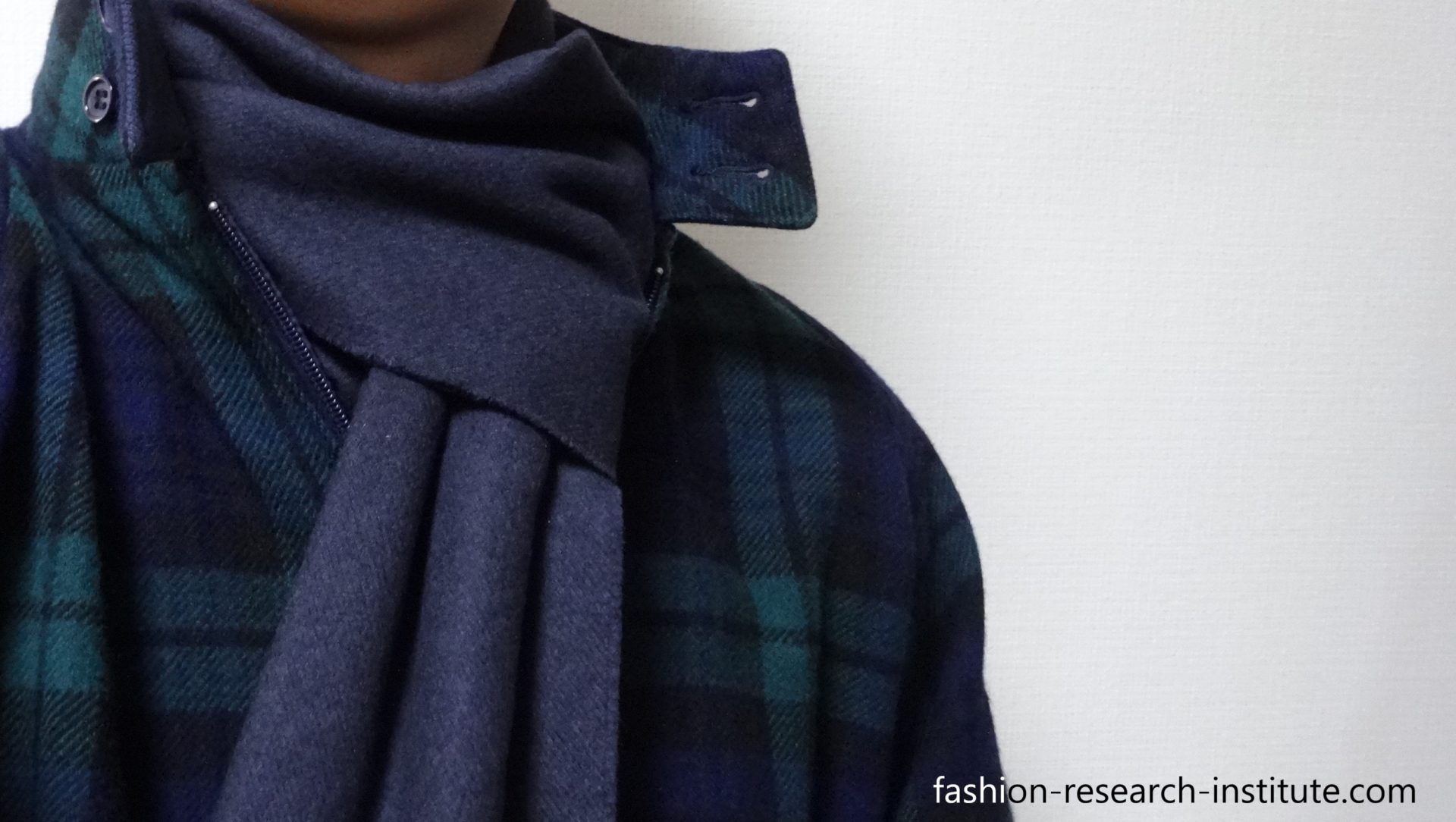
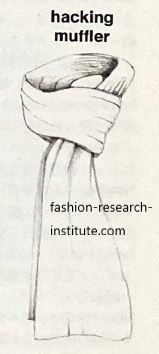
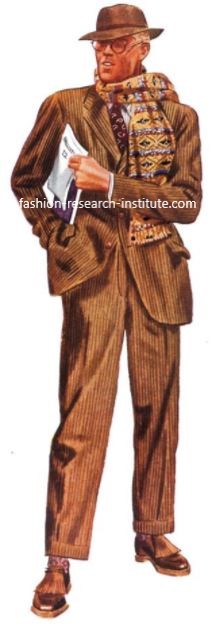
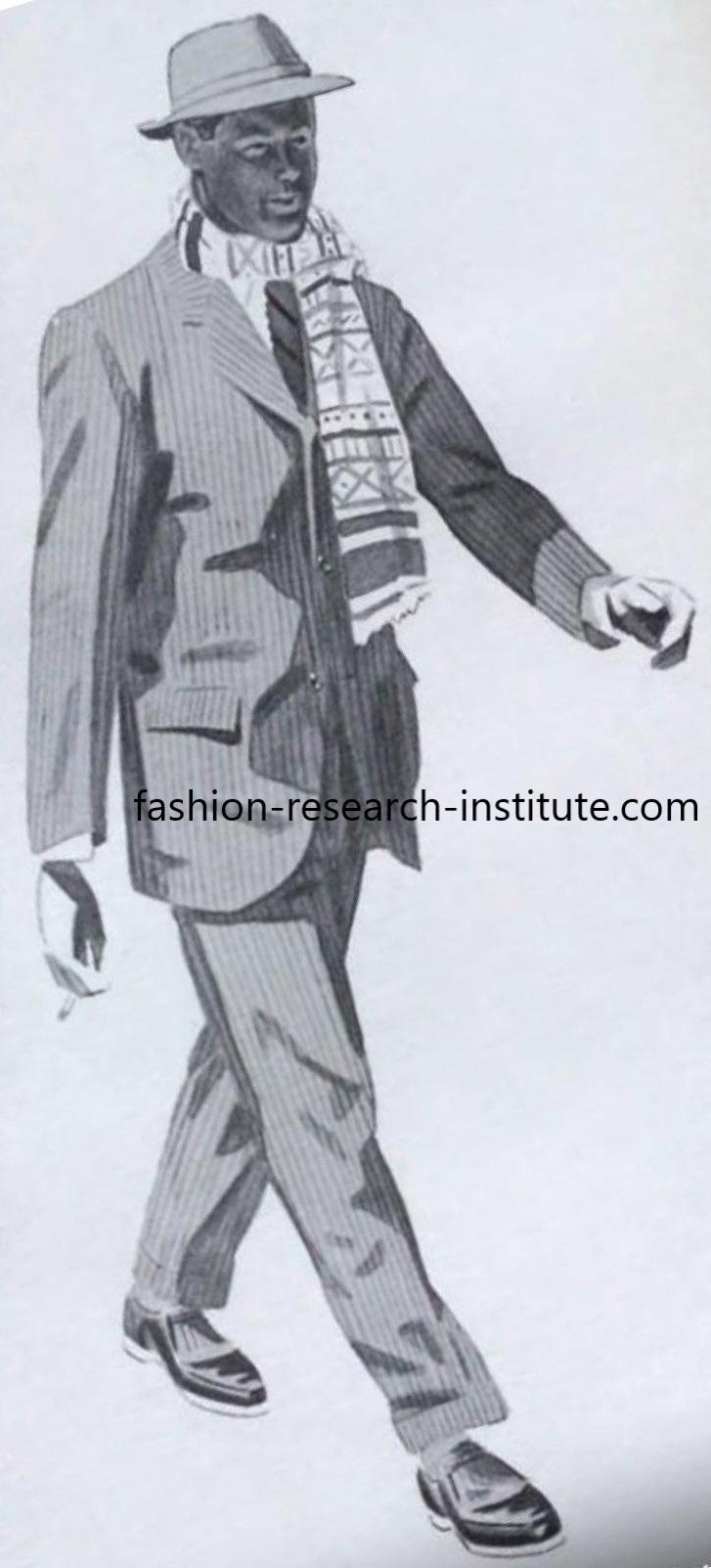
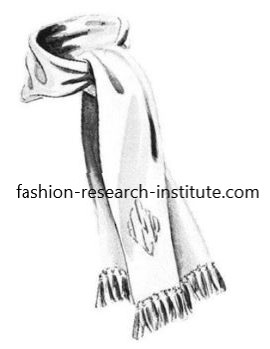
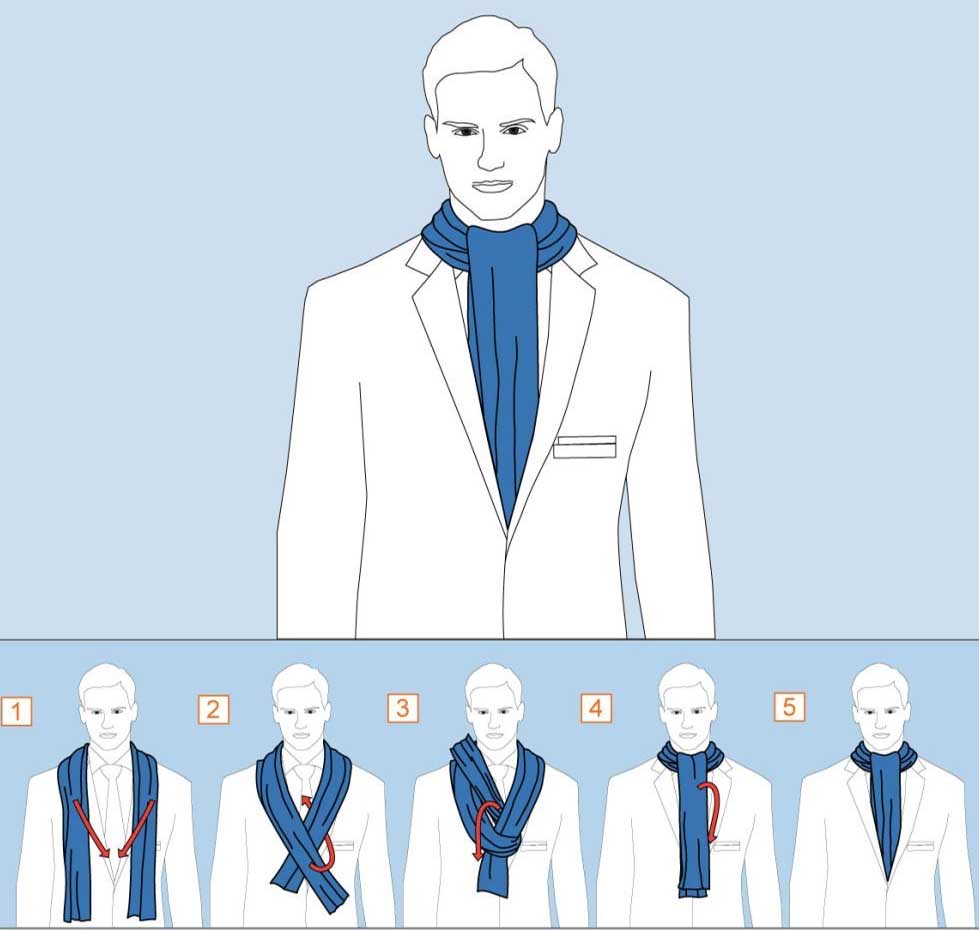
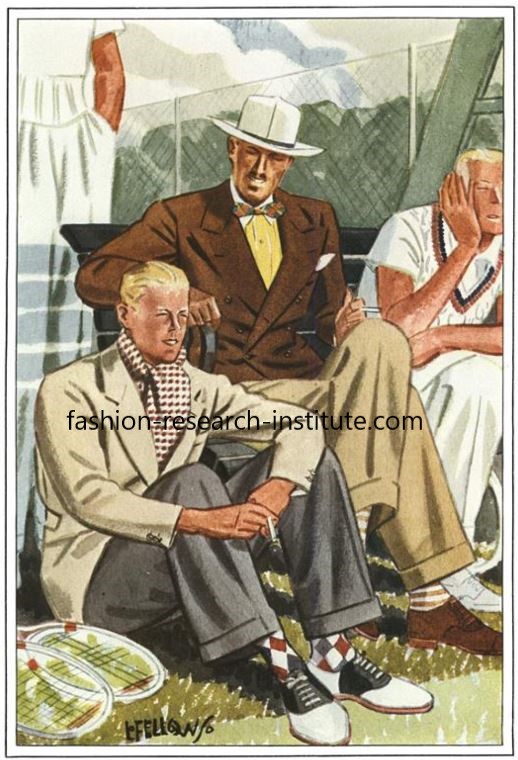
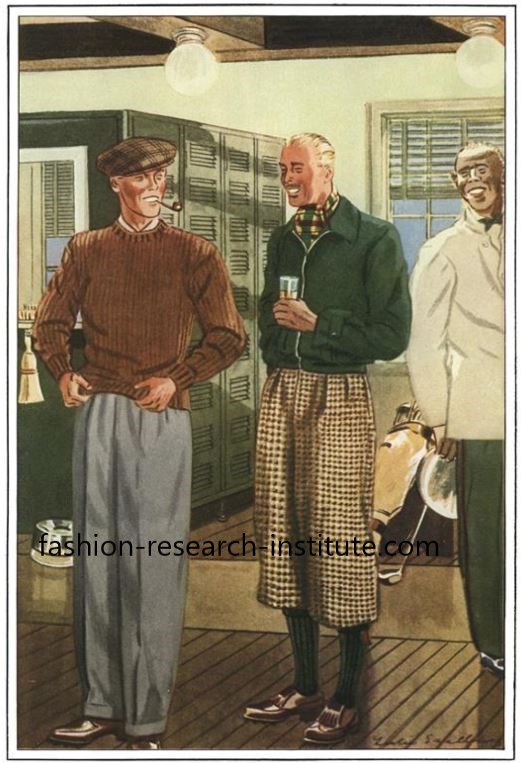
“Probably the most significant style development in mufflers,” reported Men’s Wear in 1933, “was the rather wide acceptance of the hacking scarf in some of the larger cities. Originally worn by the Prince of Wales in a spotted foulard, this muffler, measuring 72 inches in length and worn with the two ends placed together and slipped through the loop formed in the middle, sold well in both foulards and cashmere. The former were usually in blue or wine set off with white dots, while the latter ran to checks and plaids. 「マフラーにおける最も重要なスタイルの発展は、おそらくいくつかの大都市で広く受け入れられたハッキングマフラーだろう」と1933年の『メンズウェア』誌は報じた。元々はプリンス・オブ・ウェールズが着用した水玉模様のフーラードマフラーを起源とするこのマフラーは、長さが72インチ(約183cm)あり、両端を合わせて二つ折りにし、できたループに両端を通して着用する。フーラードとカシミヤの両方でよく売れた。前者は通常、白のドットが映える青やワイン色で、後者はチェック柄が多かった。
O.E. Schoeffler, William Gale, Esquire’s encyclopedia of 20th century men’s fashions, New York: McGraw-Hill, 1973, p.252
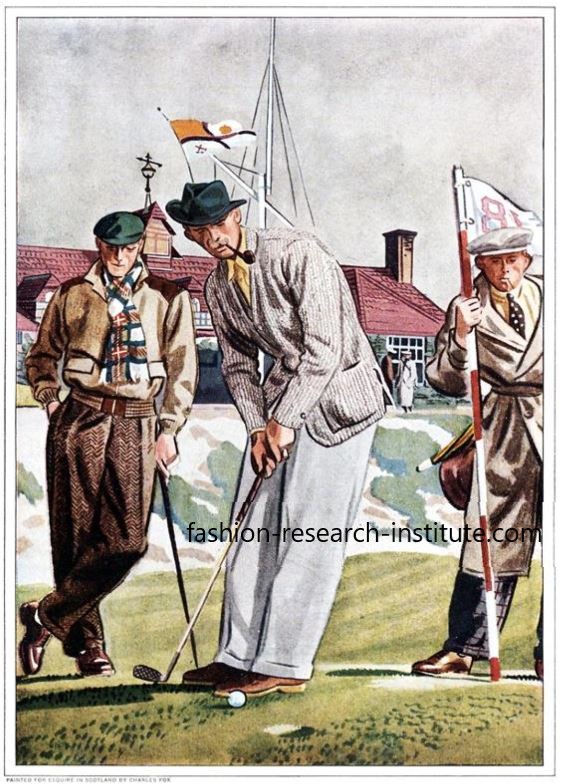
And when a wealthy sportsman went off to ski at St. Moritz, his ski outfit inevitably included a muffler of a brightly colored knit or cashmere, and it was the fashion to wear it twisted over the left shoulder, with one end hanging down the back and the other down the front. 裕福なスポーツ愛好家がサンモリッツへスキーに出かける際、そのスキーウェアには必ず鮮やかな色のニットやカシミヤのマフラーが組み込まれており、左肩で交差し、一方の端を背中側へ、もう一方の端を前に垂らすスタイルが流行していた。
O.E. Schoeffler, William Gale, Esquire’s encyclopedia of 20th century men’s fashions, New York: McGraw-Hill, 1973, p.252




コメント